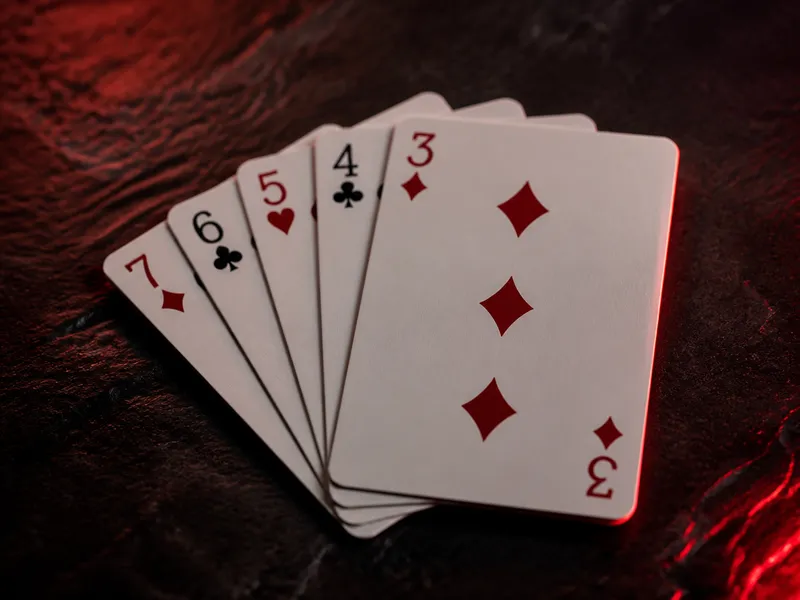
Big Two
Also known as: Dai Di, Choh Dai Di, Deuces, Chinese Poker (climbing)
Quick Rules
- 2 is the highest-ranked card, and the suit ranking is spades > hearts > clubs > diamonds for breaking ties.
- Whoever holds the 3 of diamonds leads first and must include it in their opening play.
- Play a single card, a pair, a 5-card poker-style hand (straight, flush, full house, etc.), or pass; each play must beat the last one on the table in the same category.
- Once every other player passes in a row, the pile clears and the last player to play leads next, starting any category they like.
- First player to empty their hand wins; players are sometimes ranked by how many cards they're still holding when the round ends.
How to Play (Quick Overview)
- 1
Shuffle a standard 52-card deck and deal all 52 cards out evenly, 13 to each of 4 players.
- 2
Whoever holds the 3 of diamonds leads the very first play of the game, and that play must include the 3 of diamonds.
- 3
Each play is either a single card, a pair, a triple, or a valid 5-card poker-style combination (straight, flush, full house, four-of-a-kind plus one, or straight flush).
- 4
Every following player must either play a higher combination in the exact same category and size as what's currently on the table, or pass.
- 5
Once every other player has passed in a row, the table clears, and whoever played last leads a brand new play of any category and size they choose.
- 6
Continue until a player empties their hand completely, ending the round; remaining players' hand sizes are sometimes used to rank finishing order or assign penalty points.
Objective
Be the first of the 4 players to get rid of every card in your hand.
Setup
Shuffle a standard 52-card deck and deal all 52 cards out evenly, giving each of the 4 players 13 cards.
Big Two uses its own card ranking: 2 is the highest card, above the Ace, followed by King down to 3 as the lowest. When cards of the same rank need to be compared (for example, two singles of equal rank, or deciding who holds the “highest” 3), suits break the tie in this order, highest to lowest: spades, hearts, clubs, diamonds.
How to Play
Whoever holds the 3 of diamonds leads the very first play of the game, and their opening play must include that specific card. From there, each play must be one of the following categories:
- Single: one card.
- Pair: two cards of the same rank.
- Triple: three cards of the same rank.
- Five-card hand: a straight, flush, full house, four-of-a-kind plus any one extra card, or a straight flush - ranked in that order from weakest to strongest, similar to poker hand rankings.
Play proceeds clockwise. Each following player must either play a higher-ranked combination in the exact same category and size as what’s currently on the table (a pair must be beaten by a higher pair, not a triple; a straight must be beaten by a higher straight), or pass.
Once every other player has passed in a row, the table is cleared, and whoever played the winning combination leads a brand-new play - of any category and size they like, since the table is now empty.
Scoring
Casual Big Two is typically played as a single round with no running score: the first player out simply wins that round. Some scoring variants rank all 4 players by how many cards they’re still holding when the round ends, assigning penalty points based on hand size (with extra penalties for a player left holding a very large hand, or their entire starting hand).
Winning
The first player to empty their hand completely wins the round. If playing a scored variant across multiple rounds, the player with the fewest accumulated penalty points when the group stops wins the overall game.
Variations
- Chinese Poker (a different, related game): sometimes confused with Big Two by name, Chinese Poker is a completely different hand-arranging game with the same deck but no trick-play at all - worth checking you’re not looking for that one instead.
- 2-card “bombs”: some house rules let four-of-a-kind or a straight flush beat almost anything on the table regardless of category, as a special override.
- Passing rules: some groups require a pass to be permanent for that entire clearing of the table, while others allow rejoining once a new lead is played - agree on this before starting.
History
Big Two (known by many regional names, including Dai Di and Choh Dai Di) developed in China and spread through Chinese diaspora communities across Southeast Asia, Hong Kong, and Taiwan during the 20th century, becoming one of the most popular casual card games in those regions - closely related to, but distinct from, the trick-based Chinese climbing-game tradition that also produced games like Tractor.
Fun Fact
Big Two is frequently confused with the differently structured game Chinese Poker (sometimes called Pusoy in the Philippines), which uses the same 52-card deck and shares Chinese-diaspora popularity but is actually a hand-arranging game with no trick-play at all - the two are genuinely different games that happen to share a family resemblance in name and origin region.